

Virtual Reality Crisis Training: Mastering Real-Time Response
Virtual reality crisis training improves reaction time, decision-making, and preparedness through immersive simulations without real-world risk.
When Preparation Can No Longer Be Theoretical
Crisis management has always existed in a paradox. Organisations must prepare for events they hope will never happen, yet the consequences of being unprepared are often catastrophic. From industrial accidents and infrastructure failures to security breaches and medical emergencies, modern crises unfold with speed, complexity, and emotional intensity that conventional training struggles to replicate. Classroom instruction explains protocols, tabletop exercises test logic, and live drills attempt realism at considerable cost and risk. Still, none of these methods fully recreate the cognitive pressure of a real emergency.
Virtual Reality has shifted this equation. By placing individuals inside immersive, responsive environments that mirror real-world crises, VR training introduces consequence, urgency, and emotional realism without exposing participants to physical danger. It replaces abstract instruction with embodied experience. In crisis management, where hesitation and misjudgement can escalate harm, this distinction is no longer academic. It is operational.
VR-based crisis training does not simply rehearse responses. It reshapes how individuals perceive risk, process information, and act under stress. That shift is why immersive simulation is increasingly viewed not as an enhancement to preparedness, but as a foundational capability for organisations operating in high-stakes environments.
The Cognitive Advantage of Immersive Simulation
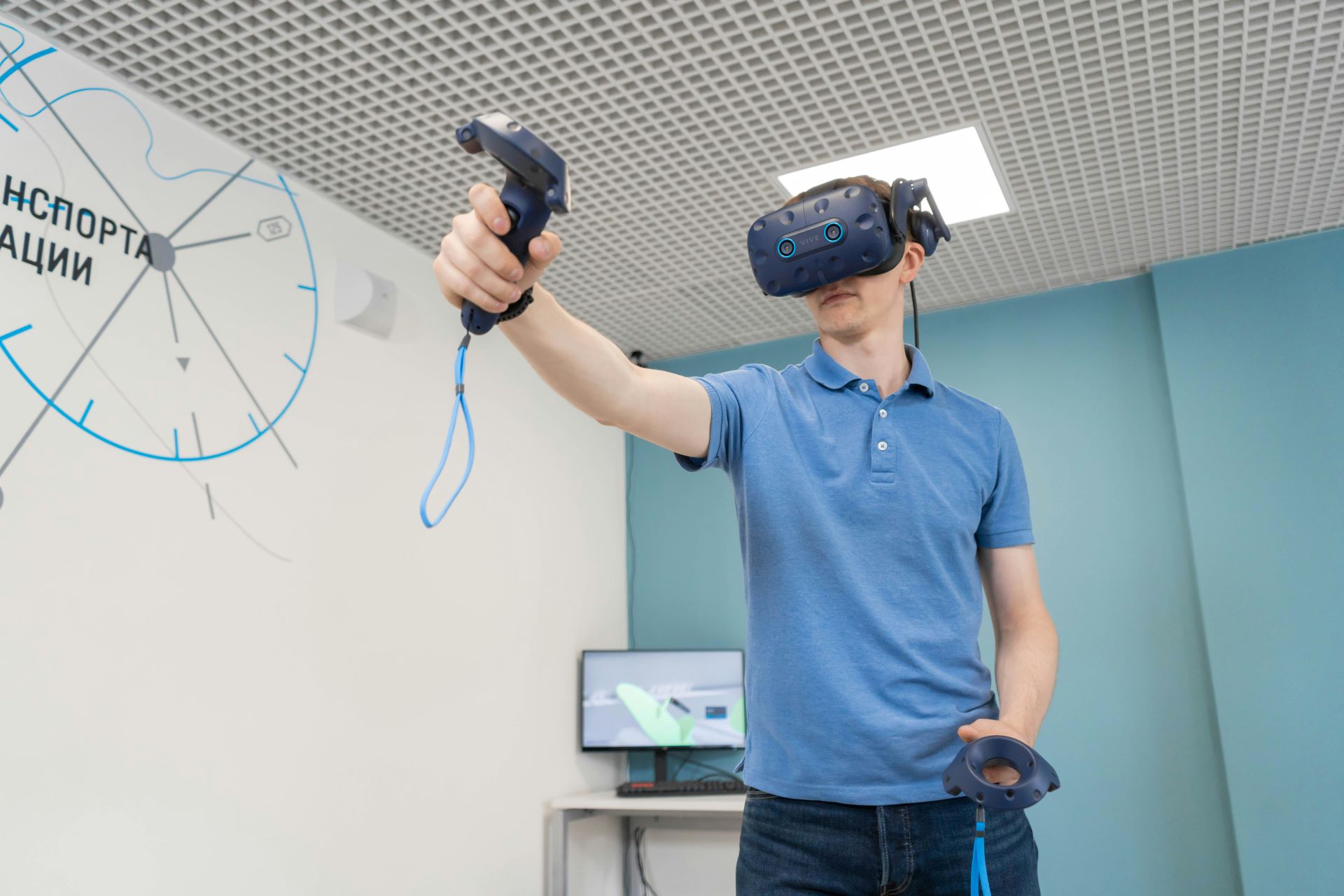
Crisis situations overwhelm the human brain. Sensory overload, incomplete information, time pressure, and fear combine to degrade rational decision-making. Traditional training methods teach what to do, but rarely condition how it feels to do it when stakes are real. VR closes this gap by engaging the same perceptual and cognitive systems activated during actual emergencies.
Inside a VR simulation, spatial awareness matters. Sound direction signals danger. Visual cues demand prioritisation. Participants must interpret evolving conditions while coordinating actions, often under simulated constraints such as poor visibility, equipment failure, or conflicting instructions. These conditions activate stress responses that mirror real crises closely enough to train behavioural resilience.
This experiential learning changes retention patterns. Studies consistently show that people remember actions they perform under realistic conditions far more effectively than information they merely read or hear. In crisis management, this means protocols are not recalled as checklists but as lived sequences of cause and effect. VR does not teach faster reactions through repetition alone; it conditions instinct.
Scenario Design as the Core of Effectiveness
The effectiveness of VR crisis training depends entirely on scenario design. A poorly constructed simulation becomes a spectacle rather than a learning tool. A well-designed one becomes a cognitive rehearsal space where behaviour can be tested, challenged, and refined.
High-quality scenarios are built around realism, variability, and escalation. Realism is not limited to visual fidelity. Environmental behaviour must follow credible physics. Fires spread, systems fail progressively, crowds react unpredictably, and time pressure increases as consequences compound. When environments behave believably, participants respond authentically.
Variability prevents memorisation. The same crisis scenario should never unfold identically twice. VR allows for branching decision paths, randomised triggers, and dynamic responses to user actions. A delayed evacuation might escalate a fire. A poor communication choice may cause team fragmentation. These variations ensure trainees cannot rely on rote responses, forcing adaptive thinking instead.
Escalation design is equally critical. Crises rarely begin at maximum intensity. Effective VR simulations build tension gradually, introducing ambiguity before clarity, forcing participants to recognise early warning signs and make decisions with incomplete data. This trains situational awareness rather than reaction alone.
Embedding Roles, Authority, and Team Dynamics
Crisis management is rarely a solo act. Decision authority, communication clarity, and interdependence between roles often determine outcomes. VR training excels when it embeds organisational structure directly into simulations.
Participants can be assigned roles with defined responsibilities, access limitations, and information asymmetry. One user may have operational control, another situational visibility, another external communication authority. This mirrors real crisis environments, where no single individual has a complete picture.
By simulating hierarchy and dependency, VR exposes friction points. Delays in information transfer, unclear authority boundaries, and breakdowns in coordination become visible and measurable. These insights are difficult to capture in traditional drills, where observers rely on subjective assessment.
Multi-user VR scenarios amplify this effect. Teams can train together remotely, interacting in the same simulated environment. Communication patterns, leadership emergence, and conflict resolution can be analysed with precision, transforming soft skills into measurable performance factors.
Measuring Reaction Time with Granular Precision
One of VR’s most powerful advantages is its capacity for measurement. Every movement, pause, glance, and decision can be logged. Reaction time, long a vague metric in crisis training, becomes quantifiable down to milliseconds.
VR systems track how long it takes participants to recognise threats, initiate protocols, and execute actions. These measurements provide baseline readiness data and enable longitudinal improvement tracking. Reaction time improvements across repeated sessions indicate increased situational awareness rather than simple familiarity.
Crucially, VR distinguishes between hesitation caused by uncertainty and delay caused by poor prioritisation. By analysing user behaviour in context, trainers can identify whether slow responses stem from inadequate knowledge, cognitive overload, or flawed decision frameworks.
This level of insight allows training to become corrective rather than generic. Instead of repeating entire drills, organisations can target specific moments where response latency consistently occurs, refining training efficiency and effectiveness.
Evaluating Decision-Making Under Pressure
Speed alone does not define effective crisis response. Decisions made quickly but incorrectly can worsen outcomes. VR training captures not just when decisions occur, but why they are made.
Decision paths can be reviewed in replay, allowing participants and facilitators to analyse choices in sequence. VR records what information was available at each moment, what alternatives existed, and what consequences followed. This context eliminates hindsight bias, focusing evaluation on reasoning rather than outcome alone.
Over time, patterns emerge. Some individuals consistently favour caution, delaying action until certainty increases. Others act decisively but overlook secondary risks. VR analytics surface these tendencies objectively, providing a foundation for targeted coaching.
For organisations, aggregated decision data reveals systemic issues. If multiple trainees misinterpret the same cue or prioritise the wrong objective, the problem may lie in protocols rather than people. VR thus becomes a diagnostic tool for organisational readiness, not merely individual competence.

Stress Exposure Without Physical Risk
A defining advantage of VR crisis training is its ability to induce psychological stress without physical danger. Stress inoculation is essential for crisis readiness, yet live drills that create genuine pressure often introduce unacceptable risk or cost.
VR balances this equation. Visual intensity, auditory chaos, time compression, and consequence simulation elevate stress responses naturally. Participants experience adrenaline, urgency, and cognitive narrowing similar to real emergencies, while remaining physically safe.
Repeated exposure builds emotional regulation. Trainees learn to recognise stress responses and maintain functional decision-making despite them. This conditioning is particularly valuable in roles where panic or freezing can cascade into broader failure.
Importantly, VR allows stress exposure to be scaled. Scenarios can be adjusted to match experience levels, ensuring trainees are challenged without being overwhelmed. This graduated approach supports skill development rather than trauma induction.
The Critical Role of Structured Debriefing
Simulation alone does not create mastery. Learning occurs in reflection. VR crisis training is most effective when paired with rigorous, structured debrief protocols that convert experience into insight.
Immediately after a simulation, participants retain vivid recall of their actions and emotions. VR debriefs leverage this window by replaying critical moments from a first-person perspective. Trainees see what they saw, hear what they heard, and relive decision points with clarity.
Facilitators guide analysis without judgment, focusing on decision rationale, information interpretation, and consequence awareness. Alternative actions can be explored, often by replaying the scenario with different choices to observe divergent outcomes.
Because VR provides objective data, debriefs move beyond opinion. Reaction times, communication delays, and decision sequences ground discussion in evidence. This fosters psychological safety and encourages honest self-assessment.
Over time, debrief insights feed back into scenario design and protocol refinement, creating a closed-loop learning system that evolves alongside organisational needs.
Industry Applications and Contextual Adaptability
VR crisis training is inherently adaptable. In healthcare, simulations recreate mass casualty incidents, operating theatre emergencies, or infectious disease outbreaks, allowing clinicians to practise triage and coordination under pressure. In industrial settings, VR prepares workers for equipment failure, chemical exposure, and confined-space incidents. In security and defence, it supports active threat response and command decision training.
What unites these applications is contextual specificity. Effective VR training reflects the actual environments, tools, and constraints trainees will face. Customisation ensures relevance, while modular design allows scenarios to be updated as risks evolve.
This adaptability makes VR particularly valuable in an era of emerging threats. Cyber-physical incidents, climate-driven disasters, and complex infrastructure failures demand preparedness beyond historical precedent. VR enables organisations to train for scenarios that have never occurred but are entirely plausible.
From Training Tool to Strategic Asset
As VR training matures, its role expands beyond skills development. Data generated through simulations informs risk modelling, workforce readiness assessment, and investment prioritisation. Organisations can identify which roles carry the greatest decision burden, where training yields the highest impact, and how preparedness correlates with operational resilience.
This elevates VR from a training expense to a strategic asset. Readiness becomes measurable, improvable, and defensible. In regulated industries, VR analytics support compliance documentation and demonstrate due diligence in preparedness planning.
Leadership teams gain visibility into crisis capability without waiting for real incidents to reveal gaps. In this sense, VR does not merely prepare organisations for crises. It reduces uncertainty about preparedness itself.
The Future Trajectory of VR Crisis Management
Advances in hardware, artificial intelligence, and data integration will deepen VR’s impact. AI-driven scenario engines will generate adaptive crises that respond intelligently to trainee behaviour. Haptic feedback will add physical realism, reinforcing muscle memory. Biometric integration will enable deeper analysis of stress response and cognitive load.
As these capabilities converge, VR crisis training will increasingly resemble rehearsal for reality rather than simulation. The distinction between training and experience will continue to blur, producing professionals who are not encountering crisis conditions for the first time when they occur.
Readiness Without Exposure
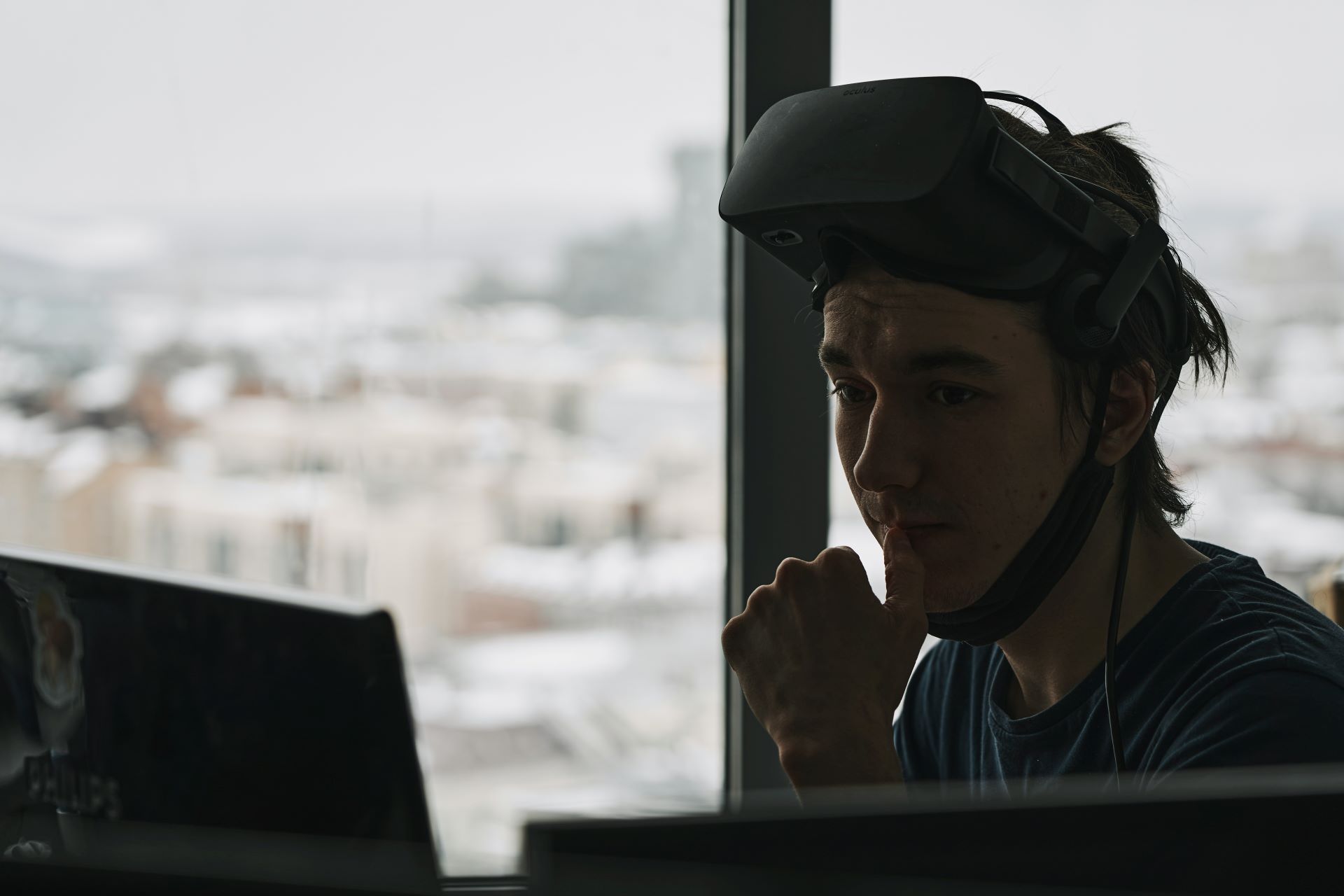
Crisis management will always involve uncertainty. What can change is how prepared individuals and organisations are when uncertainty strikes. Virtual Reality offers a rare combination of realism, safety, measurability, and adaptability that traditional training cannot match.
By immersing trainees in high-pressure scenarios, capturing detailed performance data, and enabling reflective learning through structured debriefs, VR transforms crisis preparation from theory into lived competence. It allows mistakes to be made, examined, and corrected without cost to life or infrastructure.
In environments where failure is not an option, readiness must be more than procedural. It must be embodied, practiced, and proven. VR training for crisis management delivers exactly that, preparing people not just to know what to do, but to do it when it matters most.
Author: Elisha Roodt
Virtual Reality Activations is South Africa's leading immersive event provider, bringing interactive virtual reality experiences, high-end hardware rentals, and custom software builds to corporate activations nationwide.