
Virtual Reality Booths: Turning Trade Shows into Immersive Brand Experiences
From Static Stands to Simulated Worlds Trade shows were once seas of pop-up banners and polite handshakes. Now, visitors slip on headsets and step...
From Static Stands to Simulated Worlds
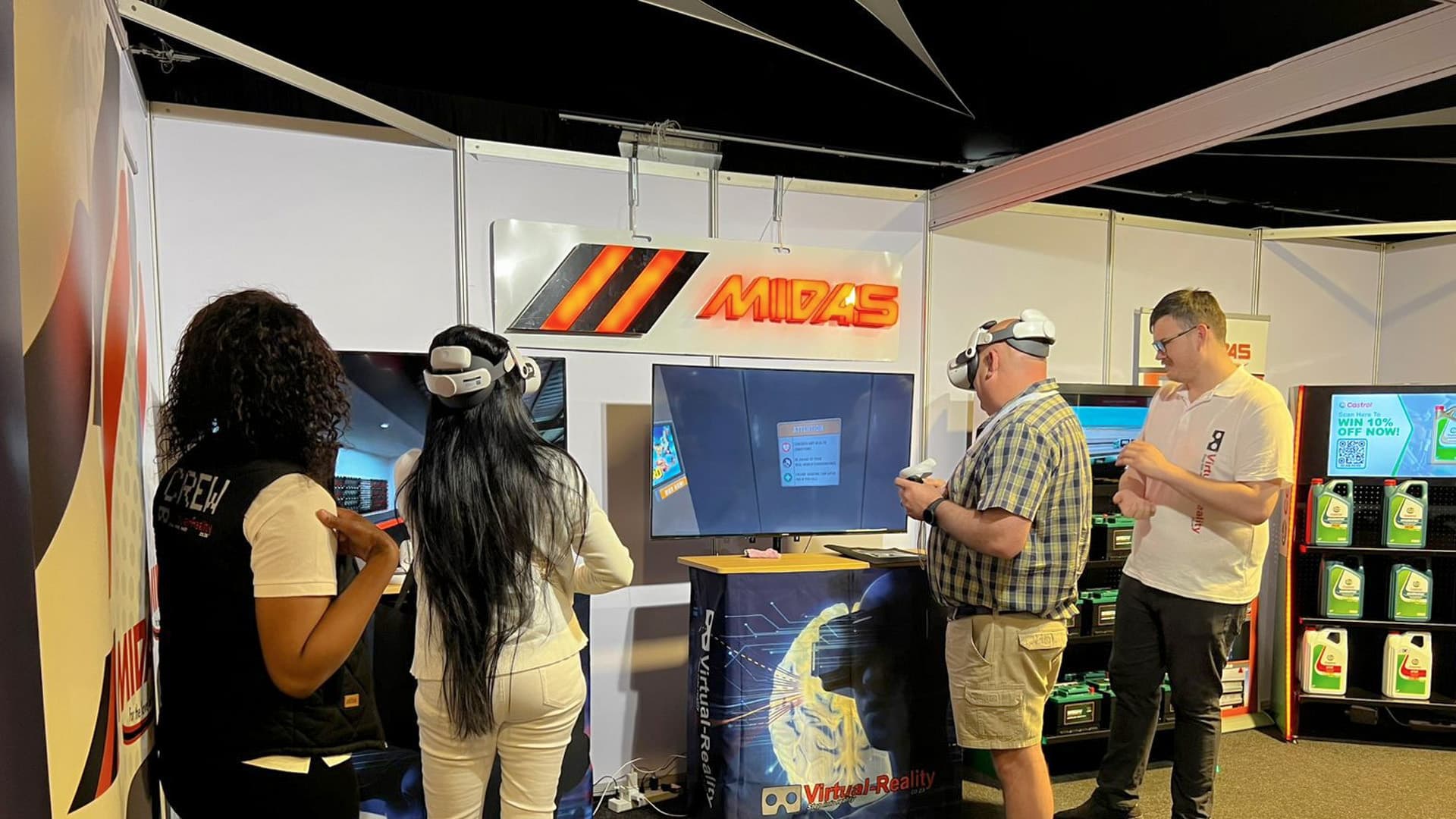
Trade shows were once seas of pop-up banners and polite handshakes. Now, visitors slip on headsets and step into convincingly simulated laboratories, showrooms, cities, and operating theatres. Virtual reality booths let brands demo products without crates of physical stock, compressing logistics into code and choreography. This shift isn’t gimmickry; it’s throughput, safety, precision, and measurable impact. In a single ten-minute session, a prospect can test-drive a car, tour a hotel, or practice placing a stent. The booth becomes a portal, not a stall—where narrative, physics, and data collection converge to convert curiosity into qualified intent.
Architecting the Immersive Booth: Hardware, Content, and Flow
Spatial Layout and Hardware Orchestration
Think of a VR booth as a mini stage with lighting, props, and choreography—only the props are headsets, controllers, and tracking lighthouses. The physical footprint must anticipate queue lines, onboarding, and a recovery zone for first-time users. Ceiling-mounted cable management reduces tangles and accelerates turnover. High-refresh headsets keep motion smooth, while external tracking or inside-out sensors maintain stable pose estimation under exhibition hall interference. Ruggedized PCs or compact edge-compute boxes sit in ventilated racks, feeding frames consistently. Everything funnels into a control station where operators launch scenarios, monitor status indicators, and triage issues before they ripple into downtime.
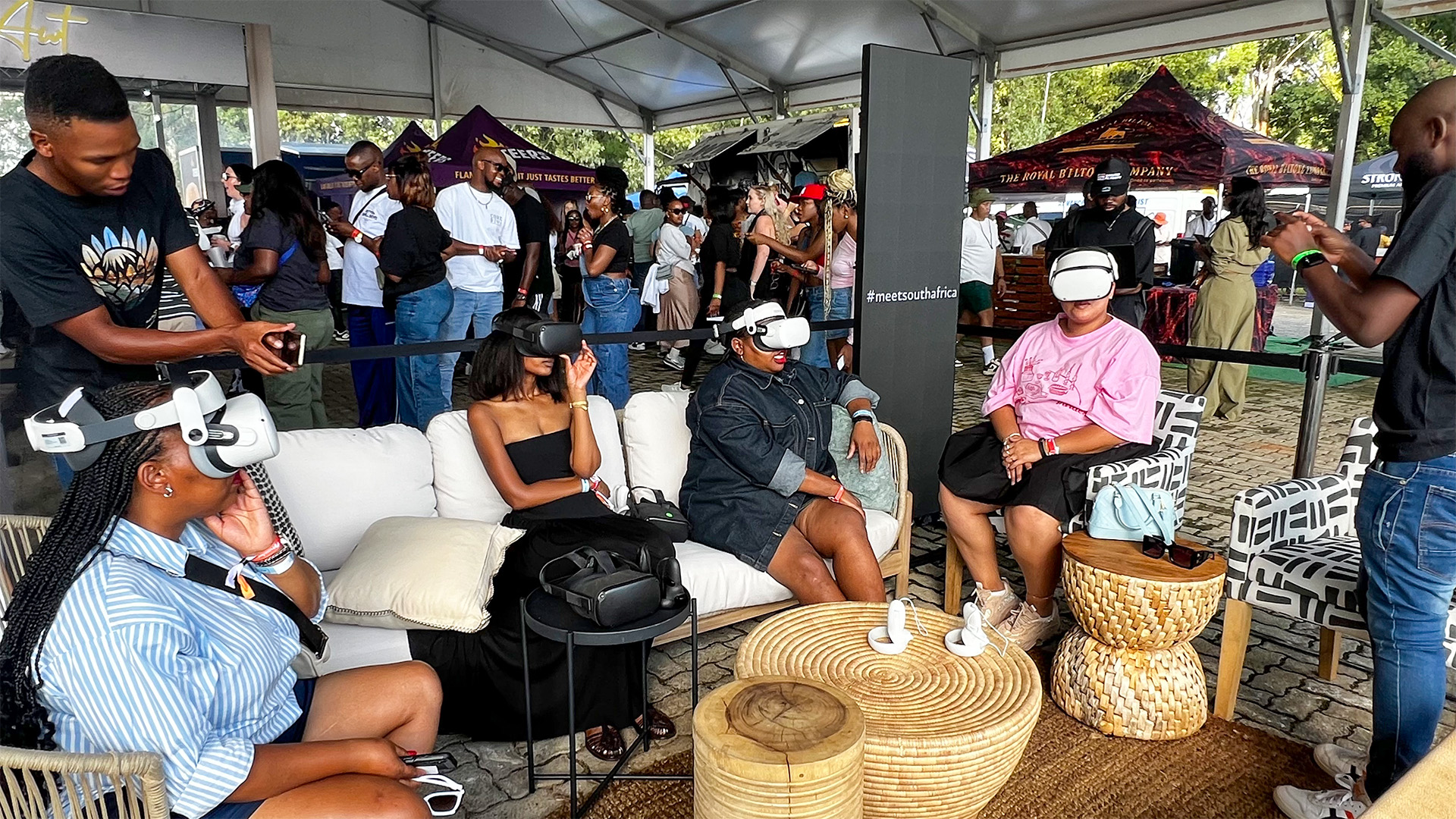
Anecdotally, the smoothest booths feel like amusement rides: clear wayfinding, confident operators, and a steady cadence. Consider sound containment: spatial audio shines, but expo floors roar. Directional speakers and acoustic panels help preserve immersion. Hygiene is non-negotiable; replaceable facial interfaces and medical-grade wipes keep headsets fresh between cycles. For accessibility, provide seated modes and larger guardians. Power redundancy matters—UPS units prevent abrupt shutdowns mid-sim. Finally, include a spectator display mirroring in-headset views, so passersby witness the story arc. When engineered well, the booth becomes a kinetic funnel where physical design amplifies virtual conviction.
Content Pipeline and Real-Time Fidelity
What visitors experience is the tip of an iceberg built from CAD models, photogrammetry captures, BIM exports, shader tweaks, and careful optimization. A robust pipeline ingests product geometry, decimates polygons intelligently, bakes lighting when appropriate, and preserves the affordances people subconsciously seek: door handles feel reachable, dashboards legible, instrument readouts responsive. Real-time engines handle physics constraints, haptics signaling, and UI anchored in 3D space. Foveated rendering squeezes performance, while Level of Detail swaps prevent popping. Every asset earns its weight; unnecessary textures and scripts are cut. The result: high frame rates that translate into comfort and credibility.
Consider a hypothetical automotive interior: stitching on the seat texture shouldn’t demand 8k maps if it hurts frame timing. Instead, detail normal maps and judicious anisotropy convey richness while maintaining headroom for runtime interactions. The story editor needs branching logic—short routes for crowded hours, deeper dives for engaged prospects. A portable settings profile lets staff tailor difficulty, language, and narrative length. Finally, a staging environment mirrors production so last-minute content drops can be validated overnight. When content meets optimization, you gain an elegant paradox: less computational waste produces more perceived realism, sustaining presence even on a hectic show floor.
Telemetry, Consent, and Operational Analytics
Great VR booths behave like instrumented laboratories. With explicit consent, sessions can log scenario selections, completion times, gaze heatmaps, and controller events. This isn’t surveillance; it’s product-market feedback wrapped in experience design. Privacy-first telemetry pipelines anonymize identifiers, aggregate metrics, and purge sensitive traces on schedule. On-site dashboards display throughput, queue estimates, headset status, and conversion signals—such as “requested a quote” or “favorited a configuration.” Operators can adjust narrative length dynamically to manage queues. Post-event, marketers correlate session cohorts with CRM outcomes, revealing which scenes, features, or comfort modes correlate to bookings, leads, or higher average deal sizes.
I once saw a booth rescued by data: a midday dip in conversions coincided with a firmware update that silently disabled haptics. Without vibration cues, tasks felt oddly weightless. Restoring haptics bumped completions back within minutes. The lesson: visibility turns anecdotes into action. A/B testing can compare tutorial styles or locomotion modes. Heatmaps may reveal that users consistently miss an affordance—say, a virtual latch—prompting a 3D UI nudge. When analytics respect consent and context, they become a co-pilot for operations, guiding improvements that are felt immediately on the show floor and echoed later in the sales pipeline.
Automotive Without Automobiles: Simulating Drives and Configurations
Perceptual Plausibility: Haptics, Motion, and Sound
Automotive VR succeeds when the brain accepts a credible feedback loop. A force-feedback wheel communicates tire grip, torque changes, and steering geometry. Bass shakers in the seat provide road texture and engine character. Optional compact motion platforms add heave, roll, and surge within safe ranges, not as carnival rides but as subtle truth-tellers. Spatialized engine audio shifts with RPM and load, while wind noise and tire scrub hint at traction limits. Importantly, motion comfort profiles adapt to the user’s tolerance, ramping intensity gently. Fidelity isn’t about maximalism; it’s about aligned cues that say, “This is how this machine behaves.”
A short narrative elevates the demo beyond a timed lap. Picture a city test route at dawn, rain beading on the windshield, adaptive headlights painting crosswalks, and an abrupt cyclist appearance testing automatic braking. The visitor toggles drive modes, feeling steering weight and throttle response shift. A haptic chirp indicates lane-keeping assist engagement. They pull into a virtual charging bay and learn realistic dwell-time estimates. Rather than static brochures, the simulation lets prospects experience systems as relationships, not bullet points. When the headset lifts, they carry a sensory memory, which tends to anchor purchasing intent better than abstract claims.
Configurable Digital Twins and Telemetry-Backed Sales
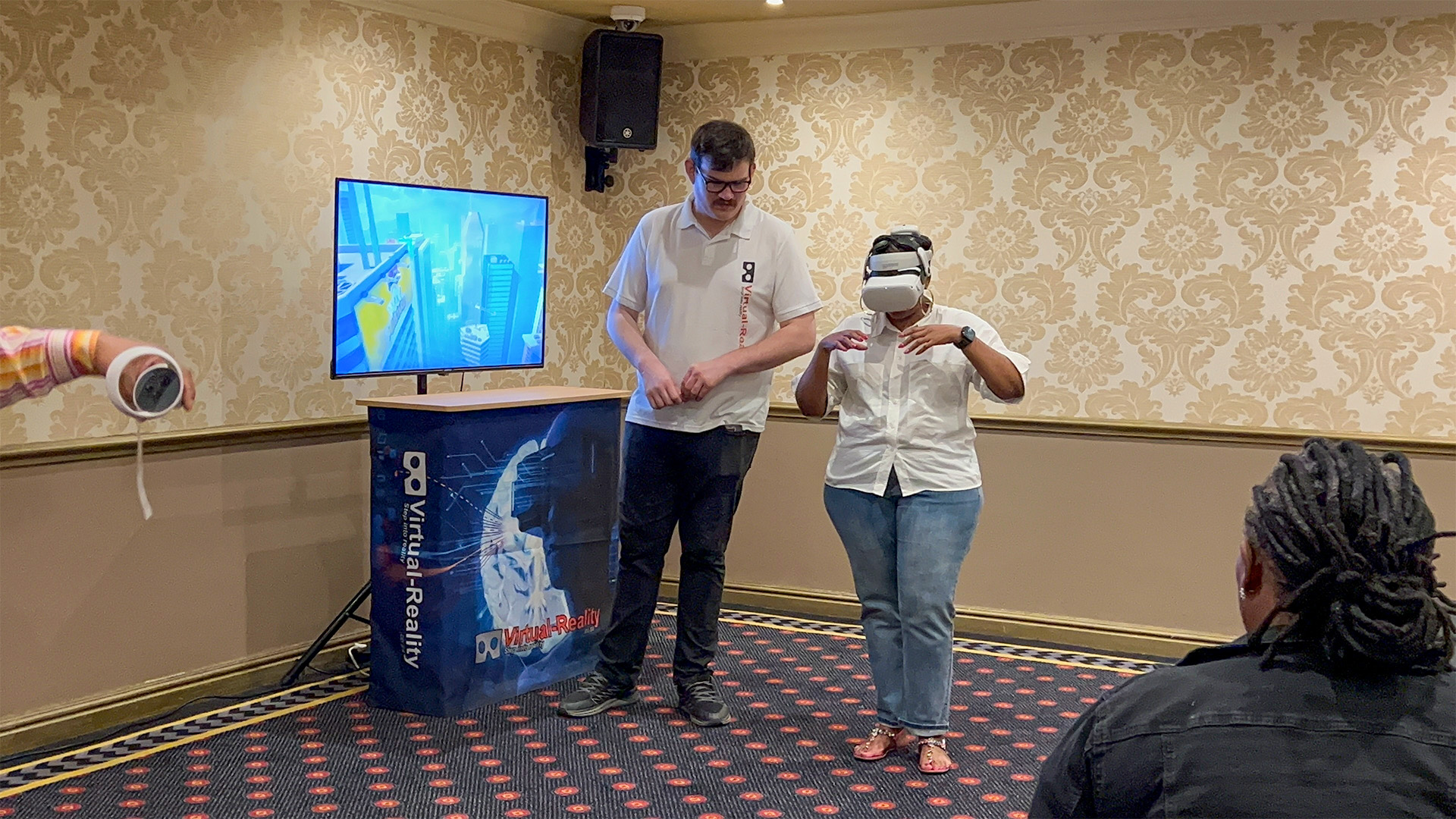
Instead of trailering cars, brands transport data-rich digital twins. Visitors assemble trims, wheels, interiors, and ADAS packages in seconds, then step around the vehicle at full scale. The configurator enforces constraints, ensuring only buildable combinations. Live cost implications and delivery timelines appear in-world, tied to inventory systems. For enterprise buyers, fleet telemetry overlays can play “what if” scenarios: how eco mode alters TCO or how driver-assist reduces incident likelihood. With consent, chosen configurations sync to a lead profile, so a salesperson continues the conversation with context. The “car on the carpet” becomes a parametric product story, not a static artifact.
One exhibitor rewired their sales funnel by exporting session summaries: route driven, features toggled, and configurations saved. Back at headquarters, analysts noticed repeated fascination with a specific lighting package paired with a performance trim—an unlikely bundle. Marketing spun a limited edition based on that emergent preference, and early allocations sold out. The broader point is operational: VR makes preference formation explicit and capturable. The booth thus functions as a compact wind tunnel for demand, where you iterate on desirability using experiential telemetry. It’s engineering rigor meets retail theatre, with the headset as the world’s most portable test track.
Safety Scenarios You Can’t Stage Physically
Certain evaluations are impossible—or irresponsible—on a live show floor: evasive maneuvers on black ice, crosswind stability at highway speeds, or blind-spot edge cases involving scooters. VR allows carefully authored stress tests with consistent conditions and clear debriefs. Scenario editors can dial coefficients of friction, precipitation, traffic density, and latency in driver assistance systems. Users safely explore outcomes, then inspect visualizations of sensor fusion, braking distances, and vehicle dynamics. This transparency turns safety features from vague promises into tactile experiences. Instead of “trust us,” brands can say, “Here is the envelope, and here’s how we protect you within it.”
Crucially, these aren’t horror shows. They’re empathetic rehearsals. After a near-miss with a simulated pedestrian, a calm voiceover explains how camera occlusion was overcome by radar, how braking force was apportioned, and why steering torque nudged the driver away from danger. The user replays the moment, experimenting with different settings and road conditions. In a crowded expo hall, such measured storytelling stands out. Prospects leave confident, not rattled. That’s the alchemy of well-crafted simulation: it compresses rare edge cases into safe, repeatable lessons that illuminate both the machine’s competence and the driver’s role as an active collaborator.
Property and Place: Real Estate and Tourism as Walkable Narratives
From BIM and Photogrammetry to Presence
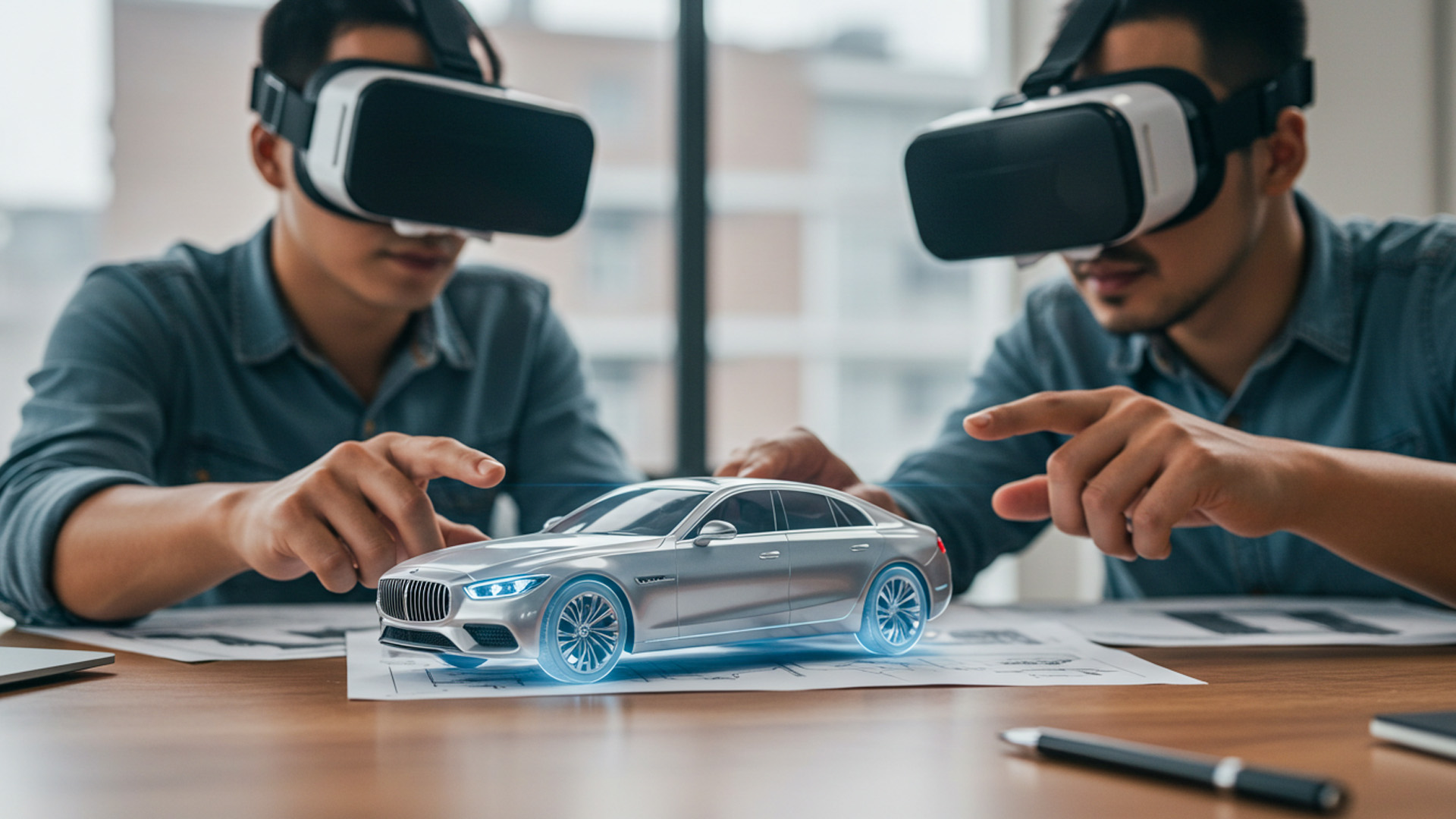
In property and tourism, presence sells. Pipelines start with BIM exports or LiDAR scans of interiors and street fronts. Photogrammetry fills texture gaps, while procedural skyboxes and dynamic lighting emulate time-of-day. For unbuilt spaces, parametric materials and accurate dimensions ensure that clearances, sightlines, and sunlight patterns feel honest. Interactivity moves beyond teleporting: open drawers, view behind walls, toggle HVAC acoustics. Dimensional accuracy empowers decisions—a sofa fit, a sightline from sink to garden, a balcony’s true depth. The booth can juxtapose seasons, tenant improvements, or furnishings instantly, turning “imagining it” into “walking it,” without lugging a single physical sample.
Consider a buyer evaluating two apartments. In VR, they compare morning glare, evaluate kitchen workflow, and test acoustic isolation by toggling simulated street noise. A quick mode displays service routes for maintenance, revealing that one layout hides duct access intelligently. For tourism, teleport to a cliffside lodge at sunset, feel spatial audio of distant surf, and glance at live availability. Tours scale across languages and accessibility modes, with captioning and narrated guidance. Even skeptics recognize the utility: these aren’t fantasy brochures; they’re decision engines. The head-mounted display becomes a passport to futures the visitor can literally step inside and scrutinize.
Wayfinding UX and Comfort on a Crowded Floor
Locomotion choices make or break booth comfort. Teleporting remains reliable, but adding short “dash” moves or guided rails can preserve context in tight quarters. Intelligent breadcrumbs—floating markers that appear when users hesitate—reduce confusion without shouting. A subtle vignette during acceleration improves comfort; gentle haptic pulses confirm selections. Diegetic UI, like a wrist slate or in-world tablet, avoids modal menus. For multiuser tours, synchronized anchors keep groups aligned to the same spatial points, preventing “Where are you?” moments. The goal isn’t maximal freedom; it’s confident exploration with training wheels durable enough to survive expo chaos and first-timer jitters.
A narrative voice can act as concierge: “Look up to your left; that skylight uses electrochromic glass.” This isn’t a script so much as adaptive scaffolding, tuned by real-time signals. If the user lingers on a view, the system suppresses prompts. If they speed through, it surfaces summaries. Meanwhile, operators watch a mirrored feed to coach politely, offering micro-interventions that keep sessions on schedule. Comfort accommodations—seated modes, adjustable vignette strength, and snap-turn angles—remain one tap away on the operator console. When comfort is engineered, the visitor’s attention shifts from navigation to evaluation, which is exactly where persuasion lives.
Lead Capture, Consentful Data, and ROI Models
Virtual tours convert when they bridge sensory conviction to actionable next steps. At predefined milestones—finishing a floor, saving a furniture layout—the system presents a simple, consentful prompt: send configurations and media to your email, or schedule a viewing. A QR code appears in-world and on the spectator display for one-tap retrieval. Behind the scenes, events flow into a CRM with metadata: square footage considered, options toggled, comfort settings preferred. This data fuels meaningful follow-ups, not generic blasts. Meanwhile, ops dashboards expose throughput and average session length, letting staff right-size narratives during peak hours without sacrificing perceived depth.
ROI modeling becomes practical because inputs are observable. You can compare bookings per hundred sessions across markets, test alternative narrative paths, or examine abandonment around specific moments. Suppose many visitors quit during a long elevator ride between floors; shorten the transition or offer a montage. For tourism boards, segment heatmaps reveal which vistas or activities trigger itinerary saves. Privacy governs everything: users opt in explicitly, can purge their data, and receive only the assets they requested. When the analytics loop respects boundaries, it earns trust, which in turn increases participation. Better data, better experiences, better outcomes—without shipping a single sofa.
Medical and High-Stakes Devices: Safe Practice, Serious Results
Procedural Simulation and Skill Transfer
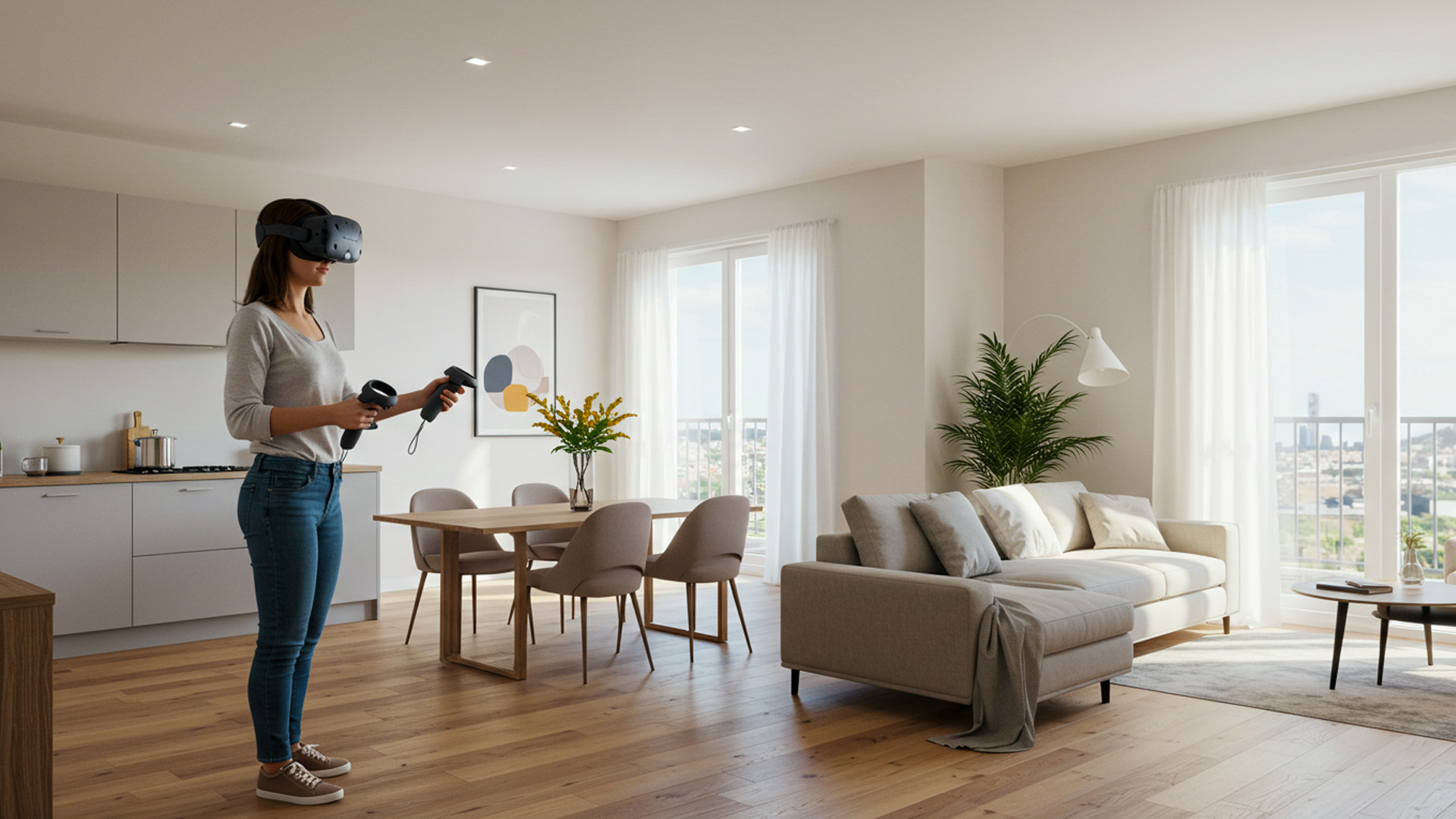
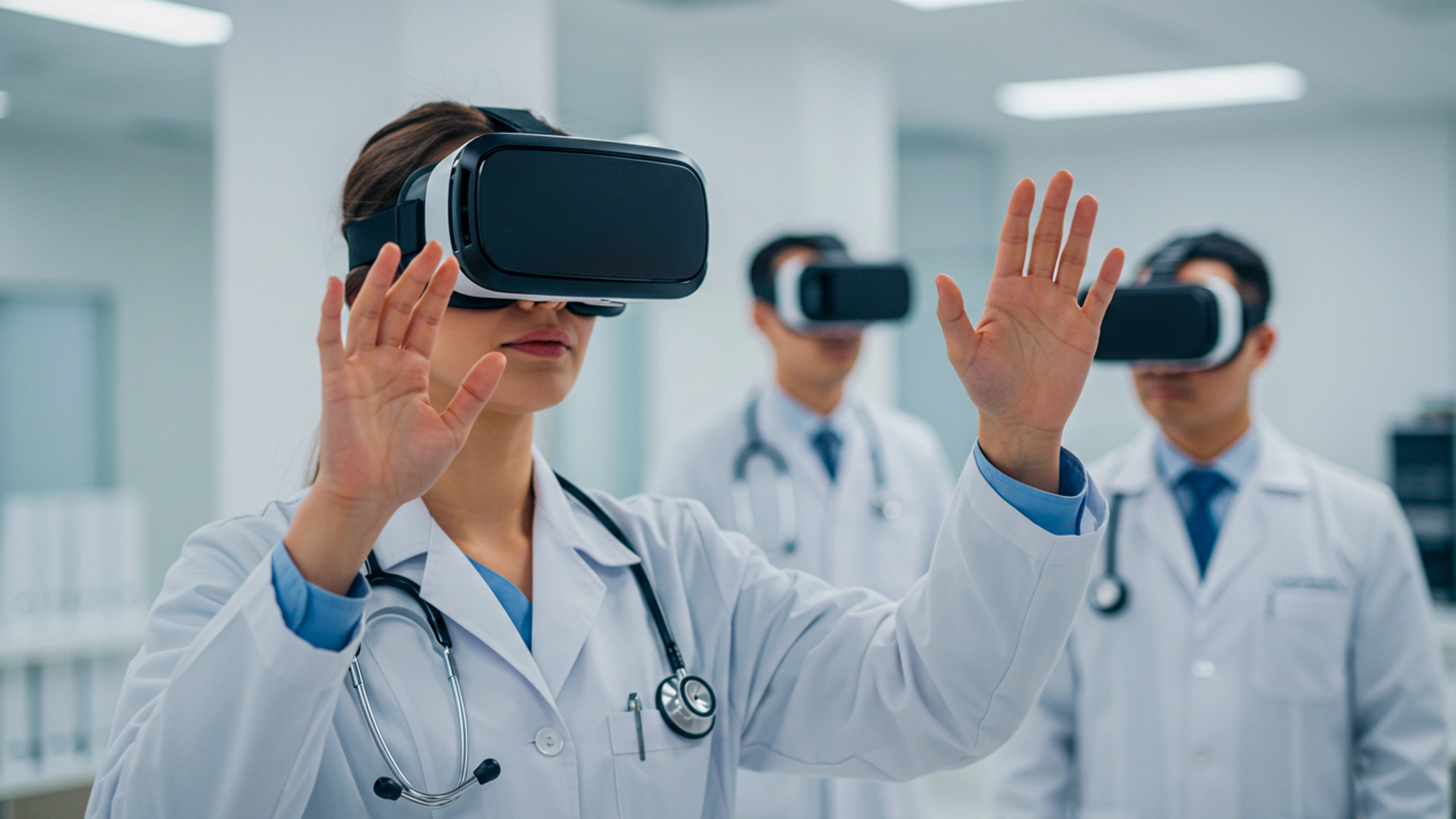
Medical exhibitors face a paradox: they must demonstrate precision tools without risking patients or transporting delicate inventory. VR solves the logistics and the ethics. Procedural simulations—catheter navigation, endoscope handling, or ultrasound interpretation—reproduce tactile signatures using haptic controllers and physical surrogates. Latency budgets are tighter here; timing shapes muscle memory. Scenarios embed cognitive load management: checklists, voice prompts, and timed decision points. Debriefs quantify performance with path efficiency, tissue contact metrics, and error counts. Rather than watch a sales pitch, clinicians perform. This re-centers the booth as a rehearsal studio where competence, not charisma, earns attention and respect.
A vivid anecdote: a skeptical surgeon tried a vascular access sim “just to be polite.” Five minutes later, they were iterating needle angles, nodding at tactile cues conveyed through a simple, well-tuned haptic insert. The rep barely spoke. Afterward, the surgeon asked for technical documentation and trial pricing. That’s the quiet power of practice-based persuasion. Beyond the wow factor, these experiences accelerate informed adoption by exposing the device’s cognitive ergonomics—how it guides attention, what it forgives, and where it demands rigor. The headset, in this context, is less a toy than a microscope for decision-making under constrained uncertainty.
Compliance, Privacy, and Offline Resilience
Regulated domains demand careful governance. Booth software should operate offline-first with encrypted local storage, syncing later over secure channels. Consent flows must be explicit and role-aware: clinicians, patients, and general attendees have different data entitlements. Logging should exclude protected health information by default, capturing only performance metrics and device usage patterns. Headset casting to public displays merits a privacy gate to avoid projecting sensitive details inadvertently. Vendor IT teams often require documented threat models, hardening guides, and firmware pinning. It sounds heavy for a trade show, but this diligence lets medical VR clear legal headwinds and fly confidently at scale.
Reliability is a reputational moat. Battery backups keep sessions alive through brief power blips; watchdogs restart crashed processes automatically. Operators carry a “rescue tablet” with session aborts, re-centering, and emergency privacy screens. Sanitization must be a choreographed ritual, not an afterthought: disposable covers, UV cabinets, and timestamped cleaning logs reassure risk-sensitive audiences. For international events, content packs ship pre-signed, region-appropriate, and language-localized, avoiding last-second downloads over flaky expo Wi-Fi. This is the invisible theatre behind the theatre. When audiences only remember a seamless experience, it’s because operations absorbed complexity, translating compliance requirements into smooth, trustworthy interaction.
Throughput Engineering: Hygiene, Comfort, and Crew Playbooks
Throughput is the currency of trade shows. A well-run medical VR booth targets predictable cycle times without feeling rushed. Onboarding scripts shorten the cold start, and practice sandboxes let users acclimate to controllers before the “real” scenario. Meanwhile, a runner manages hygiene cycles, swapping face cushions and logging sanitization. Comfort presets toggle vignette strength, locomotion constraints, and seated modes in one tap. Crew members communicate via discrete headsets, triaging newcomers, maintaining equipment, and adjusting narrative lengths based on queue telemetry. Think pit crew, not ad hoc volunteers. Consistency multiplies impact because every minute recovered yields more high-quality sessions.
Booth ops benefit from checklists and “if-this-then-that” playbooks. If tracking jitters, disable a reflective light and re-home lighthouses. If a user reports nausea, switch to a static vignette and seated interaction. If a headset overheats, rotate to a cooled spare and log the incident for postmortem. These rituals are invisible to visitors yet decisive for memory formation. People remember how an experience made them feel—and how long they waited to feel it. When teams treat throughput like a design surface, they craft an experience that is both humane and scalable, turning limited floor hours into a dense lattice of persuasive moments.
Practical Playbooks: Budgeting, Storycraft, and Measuring Success
Budgeting for Impact, Not Excess
Cost discipline starts with intent. Define a core job-to-be-done: trial a feature, convey spatial scale, train a gesture. Spend where perceptual truth hinges on fidelity—haptics, frame time, or critical textures—and save elsewhere. Rent motion platforms only if they support the narrative. Consider modular sets: one library of props and code that re-skins across verticals. Ship with spares: headsets, cables, face cushions, and controllers. Build a dry-run lab to rehearse every interaction. Finally, reserve budget for analytics and post-event content packaging. Dollars spent helping sales follow-up precisely will outperform decorative LED walls that add spectacle but no clarity.
Think of the booth as a small software product with versions. Version 1 must be lovable by doing a few things flawlessly. Later versions add scenarios and languages iteratively, not all at once. Avoid custom one-off integrations if a robust, off-the-shelf solution exists. Timebox live tinkering: stability beats novelty under trade-show conditions. And remember logistics: cases with foam cutouts, checklists taped inside lids, and a teardown plan often save more budget than shaving a few polygon counts. Frugality isn’t austerity; it’s intentionality—placing bets where they shift belief and trimming anywhere else. Impact compounds when ambition rides on reliable rails.
Narrative Design: From Cold Start to Call to Action
Every session is a three-act play: orientation, transformation, and decision. Orientation handles comfort, controls, and expectations. Transformation delivers the aha—operating the device, touring the space, feeling the system’s intelligence. Decision cements value with a clear ask: save a configuration, schedule a demo, request pricing. Micro-stories help: “You’re preparing a hybrid OR; let’s route the cabling.” Branches can personalize without bloat: a novice path with more cues, an expert path with fewer rails. A voiceover should guide, not lecture, while diegetic UI keeps eyes in the world. End with a token—screenshots, a short video, or a PDF—emailed with consent.
Metaphors smooth complexity. A battery management system becomes a reservoir whose valves you can see and tweak. A real-estate HVAC layout surfaces as glowing rivers beneath the floor. In automotive, torque vectors appear as luminous arrows around tires. These visuals collapse technical jargon into spatial intuition, so stakeholders outside engineering still grasp the stakes. There’s room for wonder, too: a brief time-of-day timelapse or material swap delights without derailing flow. The session should end slightly before the visitor wants it to—leaving curiosity intact. When narrative design honors pacing and agency, the call to action feels like the next logical step.
Metrics That Matter: From Booth Glow to Boardroom Graphs
Measure what changes decisions. Track qualified leads captured, configurations saved, demos scheduled, and post-event conversions attributed to VR sessions. Operational metrics—average wait time, session length, headset uptime—reveal friction. Experience metrics—comfort score, task completion, perceived realism—guide iteration. Tie everything to benchmarks: “VR route increased quote requests by 28% over static booth.” Export anonymized heatmaps and step-by-step funnels to inform product teams. Share highlights with the field: top objections encountered in-sim, features repeatedly replayed, moments that triggered smiles. The aim isn’t vanity numbers; it’s compounding insight that tightens the fit between product, story, and the markets you court.
After the show, repurpose assets. A “lite” web viewer with 360° captures reminds prospects of the moment. Sales engineers use recorded in-headset footage for asynchronous demos. Training teams adapt scenarios for onboarding. Meanwhile, finance appreciates that freight costs were negligible and setup crew smaller. This is the structural advantage of VR booths: they let you spin up worlds instead of shipping objects. The glow on the expo floor becomes durable value in the pipeline and the roadmap. When the dust settles, you’ve gained more than leads. You’ve built a reusable stage where product truth performs on demand, anywhere.
Practical Playbooks
Author: Elisha Roodt
Virtual Reality Activations is South Africa's leading immersive event provider, bringing interactive virtual reality experiences, high-end hardware rentals, and custom software builds to corporate activations nationwide.