

Immersive VR Advertising and the New Rules of Engagement
Virtual reality is reshaping advertising through immersive interaction, deeper engagement metrics, and measurable commercial impact for brands.
Advertising has always followed technology. From print to radio, television to digital video, each leap has reshaped how brands speak to audiences and how audiences choose to listen. Virtual reality represents the most radical shift yet, not because it introduces a new format, but because it dismantles the idea of advertising as something watched from a distance. In VR, advertising is entered, navigated, and experienced from within.
As consumer attention fragments and traditional digital ads lose effectiveness, VR advertising offers brands something increasingly rare: time, focus, and genuine emotional presence. This is not simply an evolution of video or display. It is a redefinition of engagement itself, one that forces marketers to rethink creativity, metrics, and commercial outcomes from the ground up.

Beyond the Screen: Why VR Advertising Is Fundamentally Different
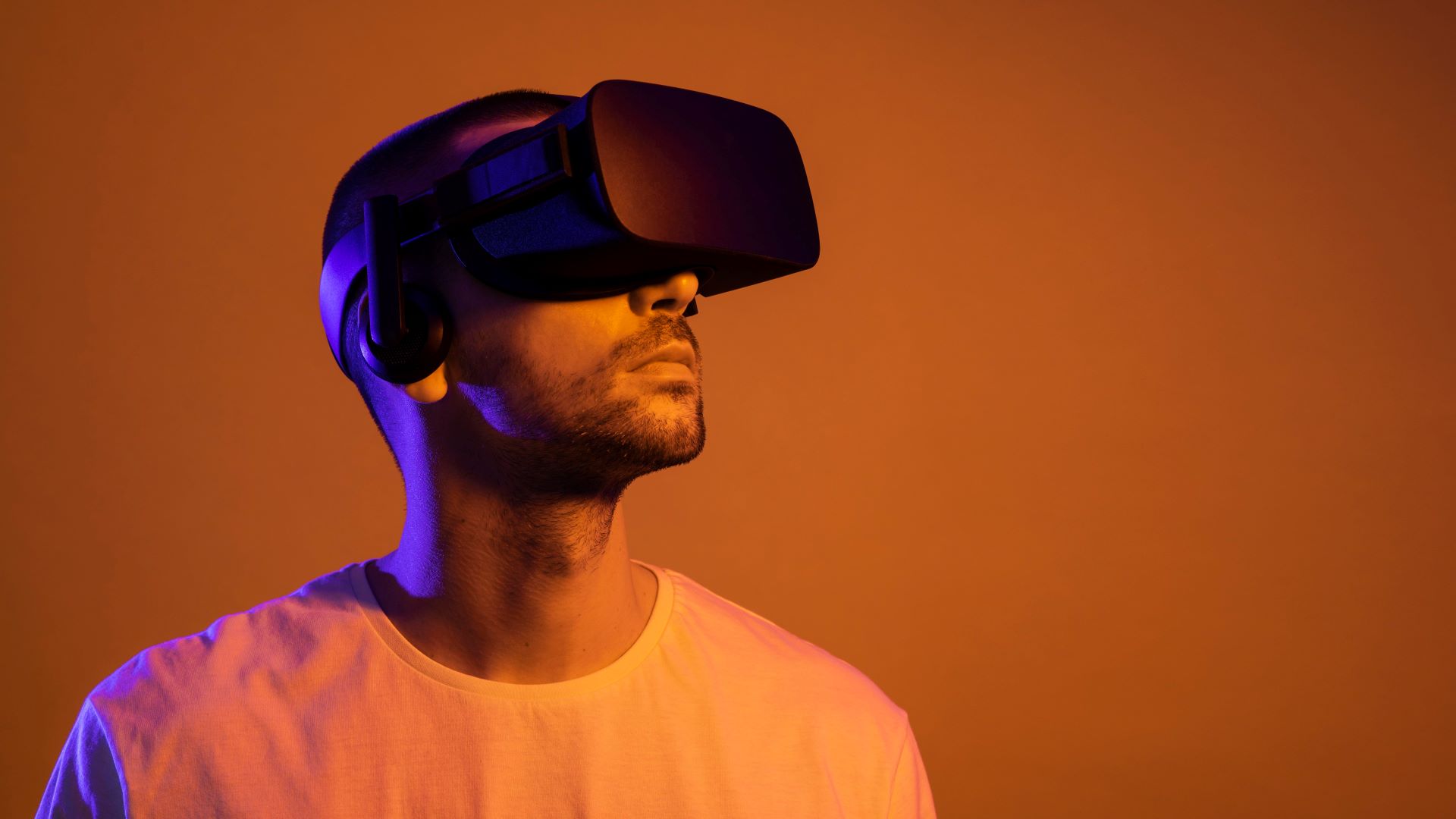
Traditional advertising operates on interruption. A television commercial cuts into a programme. A banner ad overlays content. A video preroll delays gratification. Even the most sophisticated digital campaigns rely on capturing attention momentarily before it drifts elsewhere. VR operates on a different psychological contract. When users put on a headset, they are not multitasking. They are committing.
This commitment changes the power dynamic between brand and consumer. Instead of fighting for attention, VR advertising rewards it. Users willingly step into branded environments, often spending several uninterrupted minutes inside a single experience. In a media landscape where average digital attention spans are measured in seconds, this alone represents a paradigm shift.
VR’s core distinction lies in presence. The sensation of being somewhere rather than watching something. Presence activates different cognitive pathways, increasing memory retention and emotional response. When a brand becomes part of a space the user inhabits, it ceases to be an external message and becomes part of the experience itself.
Interactivity as the New Creative Language
In VR, interactivity is not an enhancement. It is the medium. A non-interactive VR ad feels lifeless, closer to a 360-degree video than a true immersive experience. Successful VR advertising designs interaction as narrative, using user choice, movement, and exploration to communicate brand value.
Consider how product discovery changes in this environment. Instead of scrolling through features or watching a demonstration, users uncover information through action. They open virtual doors, manipulate objects, test configurations, and explore outcomes. Each interaction reinforces learning through doing, embedding product knowledge far more deeply than passive exposure ever could.
This approach demands a new creative discipline. Copywriters, designers, and strategists must think spatially. Messaging is no longer delivered in linear sequences but distributed throughout environments. Tone is communicated through lighting, sound design, and physics as much as language. The brand voice becomes environmental rather than editorial.
Rewriting the Metrics of Engagement
If VR rewrites creativity, it also rewrites measurement. Traditional metrics such as impressions, clicks, and view-through rates struggle to capture the depth of VR engagement. In immersive environments, attention is continuous rather than momentary, and interaction is voluntary rather than coerced.
VR analytics track behavior in three-dimensional space. How long users remain inside an experience. Where they move. What they touch. Which elements they return to. Even subtle signals such as head orientation and gaze duration offer insight into interest and intent. These metrics move beyond surface-level engagement into behavioral understanding.
For advertisers, this data is transformative. It allows brands to identify which product features genuinely attract attention, which narratives sustain curiosity, and where friction causes disengagement. Campaign optimization becomes experiential rather than cosmetic. Instead of tweaking headlines or thumbnails, brands refine environments, interactions, and narrative flow.
Crucially, these insights correlate strongly with commercial outcomes. Studies consistently show higher brand recall, stronger emotional association, and improved purchase intent from VR campaigns compared to traditional digital formats. Engagement in VR is not just deeper. It is more predictive.
From Awareness to Action Inside the Experience
One of VR advertising’s most powerful advantages is its ability to collapse the funnel. Awareness, consideration, and conversion no longer need to exist as separate stages across multiple platforms. In VR, these phases can unfold within a single experience.
A user might begin by exploring a branded world out of curiosity, then interact with a product, customize it, test scenarios, and ultimately trigger a real-world action such as booking a test drive, reserving a product, or sharing the experience socially. The journey feels organic rather than transactional.
This is particularly effective for high-consideration purchases. Automotive, real estate, travel, and technology brands benefit from VR’s ability to reduce uncertainty. When consumers can experience scale, functionality, and context firsthand, hesitation diminishes. Confidence increases. Decisions accelerate.
VR Advertising in the Automotive and Mobility Space
Few sectors illustrate VR advertising’s commercial potential better than automotive. Vehicles are complex, emotional, and expensive purchases. Traditional ads struggle to communicate tactile qualities, interior space, and driving experience. VR bridges this gap.
Virtual showrooms allow users to explore models in detail, switch configurations instantly, and understand features spatially. VR test drives simulate driving dynamics, interior soundscapes, and driver perspectives. For brands, this extends showroom reach beyond physical locations while collecting valuable intent data.
Importantly, VR does not replace physical test drives. It filters and prepares. Customers arrive informed, confident, and emotionally invested. Dealerships report shorter sales cycles and higher-quality leads from VR-driven engagement, demonstrating tangible commercial value rather than abstract brand lift.
Retail and Commerce: Turning Exploration into Conversion
In retail, VR advertising blurs the boundary between marketing and shopping. Virtual stores are not advertisements in the traditional sense. They are experiential environments where discovery and commerce coexist.
Users browse shelves, interact with products, and visualize ownership. Fashion brands allow virtual try-ons. Furniture brands enable room-scale visualization. Technology brands simulate use cases rather than listing specifications. Each interaction builds familiarity and reduces post-purchase regret.
Crucially, VR also supports personalization at scale. Environments adapt to user behavior, highlighting relevant products and adjusting narratives dynamically. Advertising becomes responsive rather than broadcast-driven, aligning with broader trends in data-led marketing while delivering richer experiences.
Entertainment, Media, and Experiential Storytelling
The entertainment industry was among the earliest adopters of VR advertising, using immersive trailers and branded experiences to build anticipation. Rather than summarizing narratives, VR places users inside them.
Film studios create exploratory worlds tied to story universes. Music artists host virtual listening experiences. Streaming platforms use VR to deepen fan engagement rather than simply promote content. These experiences generate earned media, social sharing, and long-term brand affinity.
What distinguishes successful campaigns is restraint. VR advertising works best when it respects user agency. Overly scripted experiences feel restrictive, undermining immersion. The most effective executions invite exploration, allowing users to uncover narrative fragments at their own pace.
The Role of Social and Shared VR Experiences
As VR platforms evolve, social functionality is becoming central to advertising strategy. Shared virtual spaces allow multiple users to interact simultaneously, turning brand experiences into communal events rather than solitary encounters.
This has profound implications for engagement. Social presence amplifies emotional response and extends session duration. Users discuss products, explore environments together, and create shared memories anchored to brand experiences. Advertising becomes participatory culture rather than isolated messaging.
For brands, social VR also introduces organic amplification. Users invite friends, host events, and share moments across platforms. The advertising experience propagates through networks not as content, but as activity.
Commercial Impact and Return on Investment
Despite its strengths, VR advertising has faced skepticism around scalability and cost. Early VR campaigns were expensive, hardware adoption was limited, and measurement frameworks were immature. These barriers are rapidly eroding.
Headset penetration continues to grow, particularly in enterprise, gaming, and education markets. Development tools have matured, reducing production costs. Distribution through app ecosystems, web-based VR, and location-based installations expands reach.
From a commercial perspective, VR advertising consistently delivers higher engagement per user, stronger recall, and improved conversion metrics in relevant categories. While reach may be smaller than mass digital campaigns, efficiency is significantly higher. VR excels not as a replacement for all advertising, but as a high-impact layer within integrated strategies.
Ethical Design and Data Responsibility
With deeper engagement comes greater responsibility. VR advertising collects intimate behavioral data, raising legitimate concerns around privacy and consent. Eye tracking, movement data, and interaction patterns reveal more than clicks ever could.
Brands operating in VR must prioritise transparency. Users should understand what data is collected and why. Experiences should respect comfort boundaries, avoiding manipulative design that exploits immersion to coerce behavior.
Ethical VR advertising builds trust rather than erodes it. As immersive media becomes more prevalent, brands that demonstrate responsibility will benefit from stronger long-term relationships with consumers.
Designing for Comfort and Accessibility
VR’s effectiveness depends on physical comfort. Poorly designed experiences cause motion sickness, fatigue, or cognitive overload. Advertising that prioritises spectacle over usability risks alienating audiences.
Successful VR campaigns are grounded in human-centered design. Movement is intuitive. Interactions are purposeful. Sessions respect attention limits. Accessibility features accommodate diverse users, expanding reach rather than narrowing it.
These considerations are not technical footnotes. They directly influence engagement, brand perception, and commercial outcomes.
The Convergence of VR, AI, and Mixed Reality
The future of VR advertising lies in convergence. Artificial intelligence personalises experiences in real time, adapting environments based on user behavior. Mixed reality blends virtual elements with physical spaces, extending immersive advertising beyond headsets.
As these technologies mature, VR advertising will become more adaptive, contextual, and scalable. Campaigns will evolve continuously rather than launch statically. Experiences will persist over time, deepening relationships rather than delivering one-off impressions.
Brands that invest early in immersive literacy will be best positioned to capitalise on this shift. Those that treat VR as a novelty risk missing its strategic potential.

Redefining Engagement for an Immersive Era
Immersive VR advertising challenges long-held assumptions about marketing. It rejects interruption in favour of invitation. It replaces exposure with participation. It measures success through behavior rather than visibility.
Most importantly, it aligns commercial objectives with user value. When advertising becomes something people choose to experience, rather than endure, engagement ceases to be a problem to solve and becomes a natural outcome.
VR does not mark the end of traditional advertising, but it signals a new centre of gravity. One where brands succeed not by shouting louder, but by building worlds worth entering.
Author: Elisha Roodt
Virtual Reality Activations is South Africa's leading immersive event provider, bringing interactive virtual reality experiences, high-end hardware rentals, and custom software builds to corporate activations nationwide.